
AI Myths vs Reality at Work: What People Actually Run Into
The official AI pitch and the week you actually had rarely match. Four workplace AI myths, what workers on the ground report instead, and the prompting habits that close the gap.
MDCrafter Team
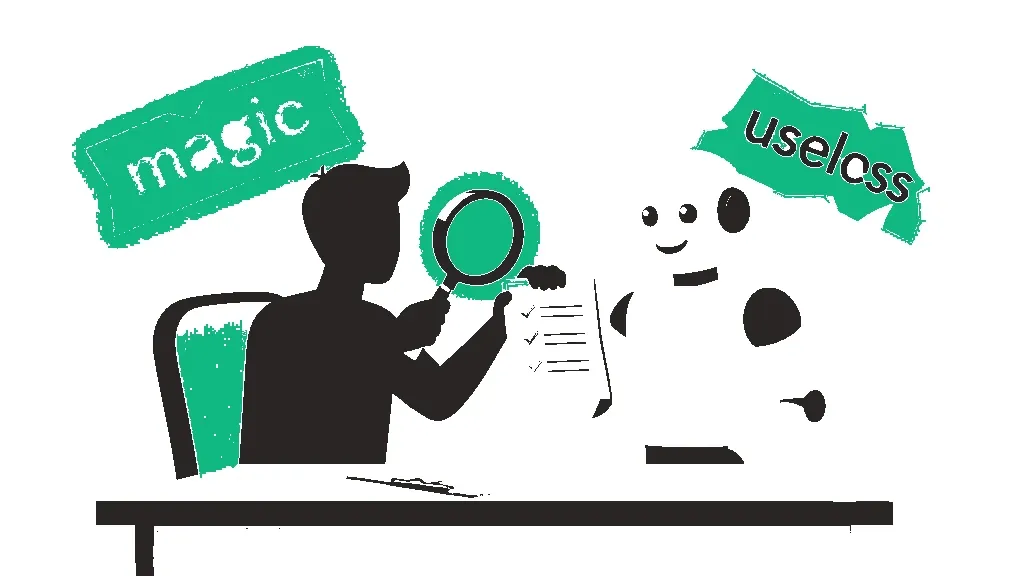
The pitch you got at the all-hands and the week you actually had with AI rarely line up. Most writing on AI myths vs reality at work, from the World Economic Forum's 'Debunked' list to university explainers, comes from the top down: someone calm and well-funded reassuring you that the robots aren't taking your desk. Fine. It just skips the part you live through, which is checking the output, explaining your usage numbers to a manager, and somehow ending the week busier than you started it.
So here's the version from the people doing the work. Four myths, what workers report instead, and the prompting habits that close some of the gap.
Myth 1: AI hands you back hours every week
This is the big one, and the honest answer to 'does AI really save time at work' is that it saves time on the generating, then spends it somewhere else. TechRadar's headline on a Foxit report put the net figure at about 16 minutes a week, because 'time saved generating content is being absorbed by the time required to trust it.' Sixteen minutes. That's one coffee.
The stranger finding comes from Harvard Business Review. Researchers Ranganathan and Ye spent eight months inside a roughly 200-person US tech company, and their conclusion was blunt: 'AI tools didn't reduce work, they consistently intensified it.' Employees 'worked at a faster pace, took on a broader scope of tasks, and extended work into more hours of the day.' And here's the detail that matters: the company didn't mandate AI use. Nobody forced the extra load. The speed just made it feel possible to say yes to more.
That's the real AI productivity reality check. Whatever minutes you win tend to get refilled, and usually by you.
Myth 2: AI hallucinations at work are rare edge cases
On Blind, a Meta employee described their AI tool as something that 'hallucinates so god damn often that I always have to have it provide sources and double check them.' Another commenter in the same thread reportedly guessed that an internal AI tool's sources checked out only about 30% of the time. That's one person's estimate, not a benchmark, but it matches the mood: nobody who uses these tools daily treats them as infallible.
RMIT Online lists 'AI is infallible and objective' as one of its four big AI myths in the workplace, and Pictory frames the core risk as believing AI is 'either magic or useless.' Both are right, but they stop short of the practical consequence. If you can't trust the output, verification becomes part of the job. That's exactly where the saved time from Myth 1 disappears.
Myth 3: Will AI take my job? The scary numbers say yes
The fear isn't irrational, but the headline numbers get misread constantly. Goldman Sachs' famous '300 million jobs' figure counts jobs exposed to AI, not jobs replaced by it. Forrester's January 2026 outlook calls job-apocalypse fears overstated and expects AI to augment around 20% of jobs rather than erase them.
Forrester also coined a handy term: 'AI washing,' meaning layoffs blamed on future AI that hasn't actually shown up yet. So when a restructuring memo cites AI, it's fair to ask whether a tool is doing that work today or whether it's just a convenient story. Ground-level reports sound a lot less apocalyptic. A Salesforce employee on Blind put it this way: 'Chatgpt can help but that's usually the fun part at work.' The meetings, the coworkers, the management and the internal tools? That's where, in their words, 'Chatgpt can't do much.'
Myth 4: If you're not using AI daily, you're falling behind
This one is largely manufactured by employers. Chris Ferdinandi's post 'The AI Mandate' catalogs the tactics: goals and bonuses tied to AI use, AI working groups, and 1:1s where your manager asks how you're using AI in your work right now. Workers in Lemmy threads describe usage dashboards broken down by team and by person, and quarterly goals that all seem to end in 'with AI.'
Ferdinandi's sharpest line: 'If AI was as good as some people think it is, you wouldn't have to force it on your employees.' He adds that 'adoption' is 'the easiest way to hit that bonus target, even if adoption makes everyone less effective.' Being measured on usage isn't the same as being behind. The same Lemmy threads say Copilot is genuinely useful for summarizing and basic tasks and hit or miss on style rewrites. Learning which bucket a task falls into takes an afternoon, not a career pivot.
What working with AI looks like when it goes well
The most grounded comment in that Blind thread was also the shortest: 'however you get your work done man. It's just a tool.' Treat it like one and a handful of habits do most of the heavy lifting:
- Ask for sources in the prompt, then actually open them. A plausible-looking link isn't a source until you've confirmed the page exists and says what the AI claims. It's the Meta employee's habit, and it's the cheapest insurance you'll find.
- Hand it the jobs it's good at. Summarizing, first drafts and reformatting are reliable wins. Judgment calls and anything that depends on context only you have are not.
- Paste in the real material instead of asking it to remember. A model working from your document has far less room to make things up than one working from memory.
- Budget the checking time honestly. If verifying a draft takes longer than writing it yourself would, write it yourself and skip the guilt.
- Decide what the freed time is for before your inbox decides for you. The HBR study's quiet warning is that saved minutes turn into extra scope by default.
AI myths vs reality at work, minus the hype
Strip away the mandates and the listicles and the picture is pretty ordinary. AI is fast at producing text and unreliable at being right, so the work shifts from writing to checking. It probably won't take your job this year, but it may well quietly expand it. The people getting real value aren't the ones topping the usage dashboard. They're the ones who know exactly which tasks it helps with, prompt for sources, and treat every confident answer as a draft until they've checked it.
References
- Blind - "how often do you use chatgpt for work related stuff"
- Go Make Things - "The AI Mandate"
- Benton Institute (excerpt of HBR) - "AI Doesn't Reduce Work, It Intensifies It"
- TechRadar - "How much time is AI really saving your workers? Apparently just 16 minutes a week"
- RMIT Online - "You won't lose your job to AI…"
- Forrester via Business Wire - "AI-Led Job Disruption Will Escalate While Fears Of A Job Apocalypse Are Overstated"
- Pictory - "AI Myths vs Reality"
- World Economic Forum - "Debunked: 8 myths about AI's effect on the workplace"
Enjoyed this? Get the weekly craft.
One crafted prompt in your inbox each week, with the reasoning behind it.
Free. Unsubscribe anytime.
Keep going
More to read
Article
The AI Productivity Paradox Is Mostly a Prompting Problem
Studies keep finding AI adds work instead of saving it. A surprising share of that hidden tax isn't the model's fault - it's how we prompt.
Guide
Choosing the Right AI Tool for Your Task
There's no single best AI assistant, only better and worse fits for a specific job. Here are the six criteria that actually decide it, plus a fast test to confirm your pick.
Tool
Prompt Crafter
Fill in role, task, tone and format, and get a clean, structured AI prompt back. No AI calls.