 Chat
Tailor Your Resume to a Job Description Without Keyword Stuffing
For when you asked ChatGPT to tailor your resume and got back something that reads like the job ad itself,…
For the parts of a job search that eat whole evenings: tailoring a resume to one specific job post without stuffing it with keywords, turning vague duties into bullet points with real numbers, drafting a cover letter that sounds like you, practising interview answers out loud, and writing the salary email you keep putting off.
ChatFor when you asked ChatGPT to tailor your resume and got back something that reads like the job ad itself,…
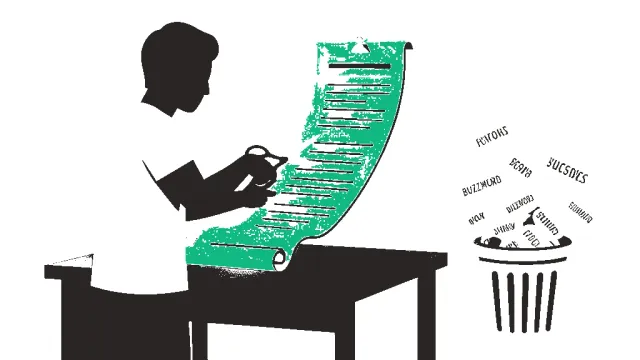
Most resume and job-search prompts online ask the AI to "make this sound more professional," which is how you end up with a resume full of "results-driven team player" and "spearheaded cross-functional synergies." Recruiters skim past that in seconds. The prompts in this category start from your real experience and one specific job post, and they are built to keep the AI from inventing skills, titles or numbers you can't back up in an interview. That means matching your resume to the language a job description actually uses without copying it word for word, rewriting duty lists into achievements you can defend, writing a cover letter that answers what the hiring manager asked for, and preparing for the interview itself with STAR answers and a mock round that gives honest feedback. A few cover the awkward parts too: explaining an employment gap, asking for a referral, and negotiating an offer by email. Every prompt asks you to paste in your own material first. The output is a draft for you to check and edit, not something to send unread, and each one flags anything it had to guess so you know exactly what to verify before it goes to an employer.
FAQ
No. Each prompt tells the model to work only from the resume, notes and job post you paste in, and to flag gaps instead of filling them. If a job asks for a skill you haven't listed, you get a note saying so rather than a made-up bullet point.
An ATS mostly checks whether your resume uses the same terms as the job post and whether it can read the layout. These prompts focus on mirroring the job's real wording in context and keeping the output in plain text, which is what helps with both. No prompt can guarantee an interview, so treat the result as a stronger draft, not a shortcut.
They can usually spot generic AI phrasing: the same handful of buzzwords, perfectly balanced sentences and claims with nothing specific behind them. The prompts here push for concrete details from your own history and ban the most overused phrases, but you should still read every line and change anything that doesn't sound like you.
No. Every prompt is plain text you copy into whatever assistant you already use, free tier included. You don't need an MDCrafter account either.
Remove anything you wouldn't want stored, such as your home address, phone number and personal ID numbers, before pasting. Your name, job history and skills are all the prompts need to do their job.
Keep going
Prompt
For when you asked ChatGPT to tailor your resume and got back something that reads like the job ad itself, with invented percentages, buzzwords like "spearheaded" and, sometimes, a changed date. Paste your true master resume and one job post. It pulls the employer's real problems from the ad, matches each to something you actually did, rewrites only the summary and the few bullets that matter, puts [number] where a real figure would help instead of making one up, and gives you a gap list for anything you can't honestly claim.
Prompt
Stops the useless 'give me feature ideas' output that always lands on automation, recommenders, reminders and dashboards. Forces the AI to pull your actual product state, users and constraints first, generates a wide divergent set tied to real user pain, then plays the design partner you don't have - pushing back and cutting the list down to what's actually worth building next. See what the competitor landscape already covers with our UX audit prompt before you commit to what's actually new.
Collection
Most productivity advice assumes the hard part is knowing what to do. With ADHD, the hard part is starting: the task sits there, fully understood, while task initiation stalls, time blindness eats the afternoon, and a five-step errand feels like a wall because your brain will not serve up step one. These ChatGPT prompts for ADHD productivity target those exact friction points instead of handing you another planner system you will abandon by Thursday.