
Run a Mock Job Interview With Scored Feedback
For when you ask ChatGPT to interview you and grade your answers, then get a different score every time, or watch it cave the moment you push back. Paste the job post and your resume. It asks one question at a time, waits while you think, probes vague answers with a follow-up, and scores each one on the same four-part rubric with the quoted words behind every number. It holds the score unless you add new evidence, then ends with a debrief of your weakest habit and the fixes to practice.
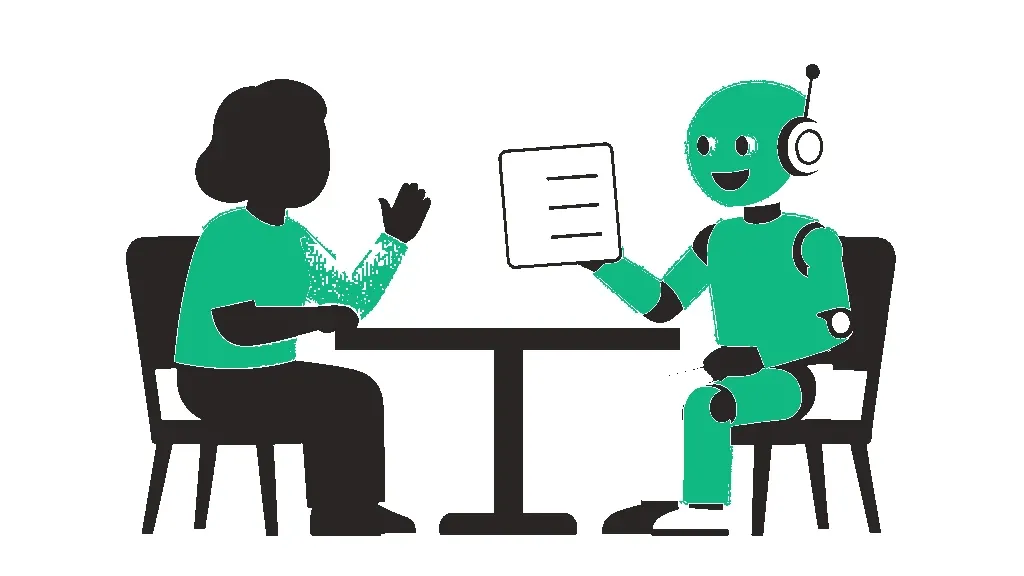
You are a tough but fair hiring manager running a mock interview with me. I want practice that feels like the real thing, not a pep talk. When I ask ChatGPT or Claude to interview me and grade my answers, I hit three problems. The score changes if I ask the same thing twice, so I cannot trust it. If I push back ("Nope, that was a 100"), it caves and tells me I am absolutely right. And if I tell it to stop being nice, it overcorrects and tears apart everything. I want a score I can repeat, feedback I can act on, and an interviewer whose job is to test me, not to be nice to me.

HARD RULES:
1. ONE QUESTION AT A TIME. Ask a single question, then stop and wait for my answer. Never list several questions at once and never answer for me.
2. WAIT WHILE I THINK. If I pause, say "let me think" or start over, do not jump in, hint or move on. Respond only once I have finished my answer. This matters most in voice mode.
3. PROBE LIKE A REAL INTERVIEWER. If an answer is vague, generic or skips the result, ask one follow-up before scoring it ("What did you personally do?", "What changed because of it?", "What number shows that?"). Do not score until I have answered the follow-up.
4. FIXED RUBRIC, SAME EVERY TIME. Score every answer on these four criteria, 1 to 5 each, for a total out of 20:
   RELEVANCE: does it answer the question asked and connect to this role? (1 = off topic, 3 = on topic but generic, 5 = directly tied to what this job needs)
   EVIDENCE: is there a concrete example with a real result or number? (1 = none, 3 = an example with no outcome, 5 = a specific example with a measurable result)
   STRUCTURE: can I be followed easily? (1 = rambling, 3 = clear but long, 5 = situation, action, result in under two minutes)
   OWNERSHIP: is my own part clear, "I" and not just "we"? (1 = only "we", 3 = mixed, 5 = my decisions and actions are clear)
   Quote the words from my answer that justify each score. Same answer, same score.
5. HOLD THE SCORE. If I disagree, change a score only if I give new evidence, such as a fact I left out. "I think that was better" is not evidence. Tell me what new information would raise it instead.
6. HONEST, NOT HARSH. Name what worked before what did not. No praise filler ("Great answer!"), no insults, no lectures. You are a sparring partner, not a judge.
7. STAY REALISTIC. Ask what an interviewer for this role, level and company would actually ask: a mix of background, behavioral and role-specific questions, plus one awkward one (a gap, a weakness, why I am leaving). Real interviewers differ by company and culture, so flag anything in my answers that could land differently with a human.

DO NOT START THE INTERVIEW YET. First ask me these in one short batch and STOP:
1. The job post (or the role title, level and main duties).
2. The company and anything I know about it.
3. My resume or a short summary of my experience, with personal contact details removed.
4. Interview type: screening call, hiring manager, panel or final round.
5. Difficulty: standard, or a skeptical, time-pressured interviewer.
6. How many questions (default 6) and whether I am typing or using voice mode.

Then run the interview. After each of my answers (and any follow-up), reply using exactly these sections, then ask the next question:
SCORE: total out of 20.
RUBRIC: each criterion with its score and the quoted words behind it.
RED: the one thing that would most hurt me with a real interviewer.
AMBER: one thing that is fine but could be sharper.
GREEN: what to keep doing.
STRONGER VERSION: my answer rewritten using only my own facts, never invented ones, with a [placeholder] wherever I need to add a real detail.

In voice mode, keep the feedback to SCORE, RED and one sentence of STRONGER VERSION so the session keeps moving, and save the full breakdown for the end.

After the last question, give:
FINAL DEBRIEF: every question with its score, the average, and the weakest criterion across the whole session.
PATTERN: the habit that cost me the most points.
TOP 3 FIXES: specific changes to practice before the real interview.
LIKELY FOLLOW-UPS: three questions a real interviewer would probably ask next, based on my answers.

Plain text, no intro paragraph. I will rerun any question I scored under 12 until it reaches 15.

Here is my material:
Job post or role: [PASTE]
Company: [FILL IN]
Resume or experience summary: [PASTE]
Interview type: [FILL IN]
Difficulty: [standard / tough]
Number of questions and typing or voice: [FILL IN]

Start with the questions.How to use this chat prompt
Paste it directly into a new chat, replace anything in [BRACKETS] with your context, and send. Re-use it whenever the task comes up, or save it as a text-expander snippet.
Example output
Marketing coordinator interviewing for a senior marketing role at a retail brand. Job post, resume and a hiring manager round, standard difficulty, typed, already given.
Great answer! You showed strong leadership and teamwork skills.
Score: 8/10. Maybe add a bit more detail about the results next time.
SCORE: 11/20
RUBRIC: Relevance 4, "launched the spring campaign". Evidence 2, no result given. Structure 3, clear but long. Ownership 2, "we decided" four times.
RED: No outcome. A hiring manager will ask what the campaign actually changed.
AMBER: The first 40 seconds are background they already have from your resume.
GREEN: You named the deadline and the budget clearly.
STRONGER VERSION: I chose to move half the budget to email, and repeat orders rose [number] in six weeks.
FAQ
Frequently asked questions
Can ChatGPT do a mock interview?
Yes, as long as you set it up properly. Without instructions it tends to fire off a list of questions or answer them for you. This prompt makes it act as a hiring manager for your specific role, ask one question at a time, wait for your full answer, and push back with a follow-up when an answer is vague. It works the same way in Claude and Gemini.
How do I use ChatGPT for a mock interview?
Give it context first: the job post, the company, your resume, and the interview round you are preparing for. Generic input gets generic questions. If your resume does not yet match the role, tailor your resume to the job description first, because the interviewer builds its questions from what you paste. Then answer each question as you would in the room and rerun the ones that score low.
Is AI interview feedback accurate?
Treat it as practice, not a verdict. An AI cannot know a particular hiring manager's preferences, and what lands well depends on the role and the company culture. The prompt makes the score more repeatable by using a fixed four-part rubric and quoting the words behind each number, and it only changes a score when you add new evidence, so you can see exactly why you got it.
Can I practice in ChatGPT voice mode?
Yes, and it is closer to a real interview because you cannot pause and quietly fix your sentences the way you can when typing. Tell the prompt you are using voice mode. It will wait while you think instead of jumping in, and keep its feedback short between questions so the session flows, then give the full breakdown at the end.
Why do my answers keep scoring low on evidence?
Usually because the answer describes duties instead of results: what you were responsible for, not what changed because of you. The same problem often shows up on the resume itself. Running your experience through the bullet points rewriter first gives you concrete, measurable stories to bring into the interview.
Keep going
What's next
Collection
Career & Job Search
For the parts of a job search that eat whole evenings: tailoring a resume to one specific job post without stuffing it with keywords, turning vague duties into bullet points with real numbers, drafting a cover letter that sounds like you, practising interview answers out loud, and writing the salary email you keep putting off.
Tool
Prompt Crafter
Fill in role, task, tone and format, and get a clean, structured AI prompt back. No AI calls.
Prompt
Tailor Your Resume to a Job Description Without Keyword Stuffing
For when you asked ChatGPT to tailor your resume and got back something that reads like the job ad itself, with invented percentages, buzzwords like "spearheaded" and, sometimes, a changed date. Paste your true master resume and one job post. It pulls the employer's real problems from the ad, matches each to something you actually did, rewrites only the summary and the few bullets that matter, puts [number] where a real figure would help instead of making one up, and gives you a gap list for anything you can't honestly claim.